
Cedar Fence Installation for Plano's HOA Communities and the Neighborhoods in Between
Privacy fences, picket fences, and cedar shadowbox styles installed for Plano homeowners, with a free on-site estimate before any commitment.
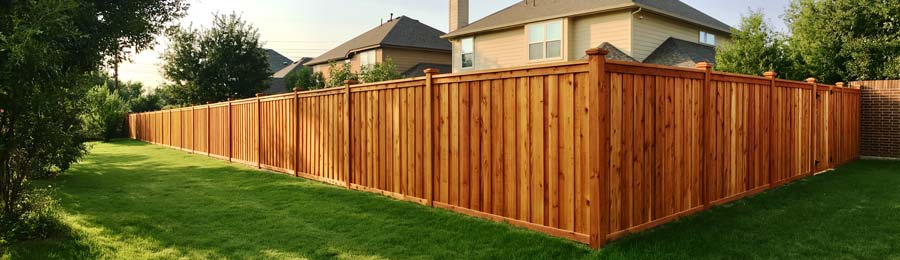
Why Plano Homeowners Already Know They Want Cedar
In most of Plano’s deed-restricted communities, the fence conversation starts the same way: a homeowner checks the HOA covenants, finds that cedar privacy fencing is the required or strongly preferred material, and starts calling for estimates. That’s not a limitation — it’s a starting point. Cedar is the right answer for Plano’s climate, Plano’s soil, and the look that Plano’s neighborhoods have maintained for thirty years. The question isn’t what material to use. The question is who installs it correctly and what it will look like in fifteen years.
Plano’s housing stock creates two distinct buyer situations. In south and central Plano — the subdivisions built through the 1980s and into the early 1990s — the original cedar fences are at or past replacement age. Posts that were set thirty years ago in clay soil that expands and contracts with every wet and dry season have shifted, and the boards that were attached to them have followed. In north Plano and along the newer tollway corridors, the situation is different: newer construction, first-cycle replacements, and buyers who want the installation done to a standard that won’t require revisiting in a decade.
Cedar or Pine: The Right Answer for Plano
For Plano homeowners, cedar is the correct choice. Cedar contains natural oils that provide a degree of resistance to moisture and insects without relying entirely on chemical treatment. In North Texas conditions — clay soil, hot summers, occasional heavy rain, and the occasional hard freeze — cedar performs better over time than treated pine. Pine is less expensive at the point of installation, but requires more frequent attention, moves more aggressively with temperature and moisture changes, and reaches replacement age sooner. The cost difference narrows quickly when you factor in the full service life.
Standard cedar privacy fence boards in Plano are typically installed at six feet in height, which satisfies most HOA requirements and local ordinances. Front-facing fences are often restricted to four feet or less — permit requirements are reviewed as part of every estimate so there are no surprises after installation begins.
Board on Board, Side by Side, and Shadowbox
Board on board is the default choice in Plano’s HOA communities for a specific reason: the overlapping picket construction leaves no gaps, which satisfies the full privacy requirements written into most Plano deed restrictions. It is also the most common upgrade when a side-by-side fence comes down — homeowners replacing a 30-year-old fence frequently move up to board on board at the same time.
Side by side is the most economical option, with pickets installed edge to edge and a small gap expected as the wood settles — appropriate where the HOA allows it and budget is the primary constraint.
Shadowbox alternates boards on each side of the rail, allowing airflow while giving both sides of the fence a finished appearance, which makes it a practical choice on shared property lines in neighborhoods where the covenant doesn’t specify a single style.
Horizontal cedar is increasingly common in north Plano’s newer communities where HOAs were written with more flexibility — the look is modern, the framing requires more precision, and the material cost runs slightly higher, but it holds up the same way under the same North Texas conditions.
The Fence Your HOA Approves and Your Neighbors Notice
Every wood fence estimate is free, carries no obligation, and is based on a real look at your Plano-area property before a number goes on anything.
What to Expect During Wood Fence Installation
A standard residential wood fence replacement in Plano typically runs one to two days from post-setting to final board attachment, depending on the linear footage, whether old fence removal is included, and whether the existing posts can be reused or need to come out entirely. Post removal is the variable most homeowners underestimate — pulling a post set three decades ago in concrete from Plano’s clay soil takes time, and that time is part of what goes into the estimate.
All new posts are set in concrete at a depth appropriate for Plano’s soil conditions — a minimum of three feet for a six-foot privacy fence, deeper for gate posts and corner posts that carry more load. Posts cure before rails and boards are attached. Same-day completion is possible for shorter runs; two-day installation is standard for full backyard replacements.
The City of Plano requires a building permit for most residential fence installations and replacements. We review permit requirements as part of the estimate conversation. Permits are typically processed within a few business days for standard residential work.
Pre-Staining Your New Fence
A new cedar fence should be stained or sealed approximately 30 to 60 days after installation regardless of whether the lumber arrived pre-stained or raw. Pre-stained cedar — which texasbackyardliving.com and several other North Texas fence companies offer as a selling point — provides a head start on protection but does not eliminate the need for follow-on staining as the wood cures and settles into its posts.
New lumber needs time to release moisture before stain penetrates properly. Applied too early, stain sits on the surface rather than bonding to the grain, which shortens the protection window and can produce uneven coverage that requires stripping before the next application. In North Texas’s UV environment, a properly timed and applied stain job extends the service life of a cedar fence by years. We offer professional fence staining and sealing as a scheduled follow-on service once your new fence has fully cured.
When Repair Makes More Sense Than Full Replacement
Not every wood fence in Plano needs to come out from the ground up. If the posts are structurally sound and damage is limited to boards and rails, targeted fence repair is often the faster and more cost-effective path. Every estimate covers both scenarios — repair and full replacement — so the decision is based on what the fence actually needs, not on an assumption going in. If storm damage is part of the picture, our storm damage fence replacement service includes thorough damage documentation and a written estimate suitable for an insurance adjuster’s review.
Common Questions About Wood Fence Installation in Plano
Do Plano's HOA covenants specify what type of wood fence I can install?
Most of Plano’s deed-restricted communities specify cedar as the required or strongly preferred material, and many go further — requiring board-on-board construction specifically because it eliminates the gaps that side-by-side fencing develops as the wood settles. Some HOAs also restrict fence height, gate placement, and whether horizontal styles are permitted. The practical effect is that most Plano homeowners don’t choose their fence style from a blank slate — they start with what the covenant allows and work from there. We pull the relevant HOA requirements before every estimate so the fence we install meets the deed restriction before the first post goes in the ground.
Why are so many fences being replaced in Plano's established neighborhoods right now?
Plano’s residential subdivisions were built in waves from the late 1970s through the mid-1990s. The cedar fences installed during that era are now 30 to 45 years old — at or past the realistic service life for wood posts set in North Texas clay soil. The combination of Plano’s freeze-thaw cycles, spring storm seasons, and sustained UV exposure accelerates the deterioration timeline on fences that were never re-stained or maintained. The result is that fence replacement is one of the most common home projects across Plano’s established zip codes right now — not because anything went wrong, but because the original fences have simply run their course.
What is the difference between board on board and side by side cedar fencing?
Board on board uses overlapping pickets — each board covers the edge of the one next to it, leaving no gaps even as the wood expands and contracts with North Texas temperature swings. It is the most common style required by Plano HOA covenants because it maintains full privacy compliance over time. Side by side places pickets edge to edge with no overlap. It costs less per linear foot because it uses less lumber, but small gaps develop as the wood dries and settles — which is why some HOAs specifically exclude it. If your deed restriction specifies a privacy fence, board on board is almost always what that means in practice.
How does Plano's clay soil affect wood fence post life?
Significantly. Plano sits on expansive clay that swells when wet and contracts when dry — a cycle that repeats with every rain event and dry stretch throughout the year. Posts set too shallow or without adequate concrete will heave, lean, and eventually fail at the base long before the fence boards above them show significant wear. We set posts to a minimum of three feet for standard six-foot privacy fences, deeper for corner posts and gate posts that carry additional load. Post depth is the single biggest variable in how long a wood fence holds its line in Plano’s soil conditions — it matters more than the lumber grade or the hardware.
Should I choose pre-stained cedar or have the fence stained after installation?
Pre-stained cedar arrives from the mill with a factory-applied stain and is offered by several North Texas fence companies as a convenience option. It provides a head start on UV and moisture protection but does not eliminate the need for follow-on staining as the wood cures. The more important variable is timing — regardless of whether the lumber arrives pre-stained or raw, new cedar needs 30 to 60 days after installation to release moisture and settle into its posts before stain can penetrate the grain properly. Applied too early, stain sits on the surface rather than bonding to the wood, which shortens the protection window. We schedule staining as a follow-on service once your new fence has fully cured.
How much does cedar fence installation cost in Plano?
Western Red Cedar privacy fence installation in Plano typically runs $36 to $50 per linear foot installed, depending on fence height, style, and whether the existing fence and posts need to be removed before the new installation begins. A standard 150-linear-foot backyard fence runs roughly $5,400 to $7,500. Board-on-board and horizontal cedar styles run toward the higher end of that range due to additional lumber requirements. Gate installation, permit fees, and post removal from prior installations are each factored into the estimate separately. Every estimate is free and based on a real look at the property before any number is committed.