
Vinyl Fencing for Plano Homeowners Who Are Done Staining Cedar
Low-maintenance vinyl privacy fences built for North Texas heat, installed across Plano and the surrounding communities, with a free on-site estimate before any commitment.
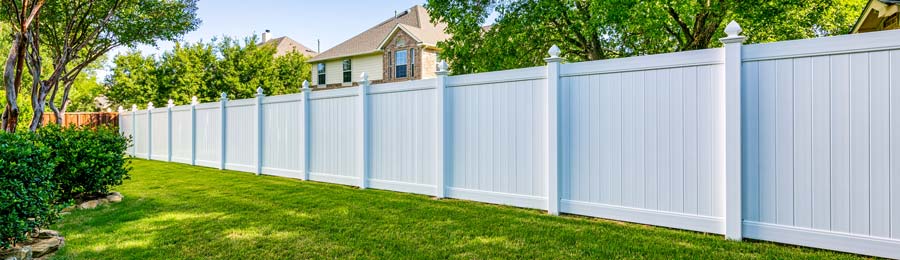
The Maintenance Calculation That Sends Plano Homeowners to Vinyl
The math that brings most Plano homeowners to vinyl is straightforward. A cedar privacy fence requires staining every three to five years to maintain its protection against North Texas UV exposure and moisture cycling. Over a 20-year period that is four to six staining cycles — each one a cost, a scheduling decision, and a week of avoiding the backyard while the stain cures. Vinyl requires none of that. No staining, no sealing, no painting, no annual inspection for checking or graying. The upfront cost is higher than cedar. The 20-year total cost of ownership is frequently lower.
That math only works if two things are true: the vinyl product is built to handle Plano’s climate, and the HOA covenant allows vinyl on the property. The first question is about material quality. The second question needs to be answered before the first one matters.
Does Your Plano HOA Allow Vinyl Fencing?
Plano’s deed-restricted communities vary significantly on vinyl. Some HOA covenants specify cedar as the required rear yard fencing material and exclude vinyl entirely. Others allow vinyl but require it to match the color and profile of neighboring fences — which means the color selection is a compliance decision, not just a personal preference. Some of Plano’s newer communities along the northern tollway corridors were written with vinyl explicitly on the approved materials list. The only way to know which category your property falls into is to read the covenant. We pull and review HOA requirements as part of every estimate — if vinyl is not permitted on your property, we will tell you before any material is ordered.
Vinyl Fence Styles Available in Plano
The three most common vinyl fence styles in Plano’s residential market are privacy panels, which run board-to-board with no gaps for full rear yard enclosure; picket fences, typically used in front yards where HOA covenants allow a decorative rather than solid fence line; and ranch rail, which is common on larger lots and properties with semi-rural character at Plano’s edges. Privacy panels are available in a range of heights — six feet is standard for rear yard HOA compliance in most Plano communities. Colors in Plano’s market run predominantly white and tan, with some HOAs specifying one or the other to maintain visual consistency across shared property lines.
The Vinyl Quality Question That Matters Most in a North Texas Summer
What Separates Vinyl That Holds Up From Vinyl That Does Not
UV Inhibitors and Why the Compound Matters More Than the Warranty
Not all vinyl fence products perform equally in Plano’s climate. The primary threat to vinyl fencing in North Texas is not moisture or impact — it is ultraviolet radiation. Sustained summer heat and UV exposure cause low-quality vinyl to yellow, become brittle, and develop surface cracking within five to seven years of installation. The difference between vinyl that weathers well and vinyl that does not is in the compound formulation, not the surface finish. Quality vinyl fence products incorporate UV inhibitors and impact modifiers into the PVC compound itself — not as a coating applied over a base material, but as part of the material at the molecular level. A fence built from properly formulated compound holds its color, its flexibility, and its structural integrity under North Texas sun in a way that budget vinyl cannot. Wall thickness is the other variable that matters — residential privacy panels should have a minimum wall thickness of 0.125 inches. We specify commercial-grade vinyl panels on every residential installation.
Color, Profile, and HOA Compliance in Plano
Plano HOAs that permit vinyl frequently specify color and profile requirements that go beyond what a standard fence company catalog offers. White and tan are the two approved colors in most Plano communities that have a preference written into the covenant. Some covenants require that replacement fencing match the existing fence profile on adjacent properties — which means if your neighbor has a specific tongue-and-groove privacy panel, your replacement needs to match it. We review these requirements before material selection and specify accordingly. A vinyl fence installed in the wrong color or profile creates an HOA compliance issue that is expensive to correct after the fact.
The Cedar vs. Vinyl Decision for Plano Homeowners
Cedar costs less upfront and is the material most Plano HOA covenants were written around. It requires staining every three to five years and has a realistic service life of 20 to 30 years with proper maintenance. Vinyl costs more upfront, requires no ongoing maintenance, and carries manufacturer warranties of 20 to 30 years on quality products. For homeowners planning to stay in their Plano home for 15 or more years and whose HOA covenant allows vinyl, the total cost of ownership comparison frequently favors vinyl. For homeowners whose HOA requires cedar, or who prefer the natural appearance of wood, cedar fence installation remains the standard and the correct choice. We install both and will tell you honestly which one makes more sense for your specific property and HOA situation.
Common Questions About Vinyl Fence Installation in Plano
Will my Plano HOA approve a vinyl fence?
It depends on your specific covenant. Plano’s older established neighborhoods were typically written with cedar as the specified rear yard fencing material, and some explicitly exclude vinyl. Newer HOA communities along Plano’s northern corridors are more likely to include vinyl on the approved materials list. Some covenants that allow vinyl also specify color requirements — white or tan in most cases — and may require the fence profile to match neighboring properties. The only definitive answer comes from reading the covenant for your specific community. We pull and review HOA documentation before every estimate and will tell you clearly whether vinyl is an option for your property before any discussion of material or pricing.
How does vinyl fencing hold up in Plano's summer heat?
Quality vinyl holds up well. Budget vinyl does not. The difference is in the compound formulation — specifically whether UV inhibitors and impact modifiers are incorporated into the PVC material itself or are absent entirely. Vinyl products built with proper UV stabilization maintain their color, flexibility, and structural integrity through North Texas summers without yellowing, chalking, or becoming brittle. Products without adequate UV stabilization begin showing degradation within five to seven years of installation. We specify commercial-grade vinyl panels with built-in UV inhibitors on every residential installation. Wall thickness of at least 0.125 inches is our minimum specification for privacy panel applications.
Is vinyl or cedar the better choice for a Plano backyard fence?
For homeowners whose HOA allows vinyl and who plan to stay in their home for 15 or more years, vinyl frequently wins on total cost of ownership. Cedar costs less upfront but requires staining every three to five years — four to six cycles over a 20-year period. Vinyl costs more upfront and requires no ongoing maintenance. The 20-year total cost comparison is often close, and sometimes favors vinyl when staining labor and materials are factored in. For homeowners whose HOA specifies cedar, or who prefer the natural appearance of wood, cedar remains the right answer. We install both materials and provide an honest comparison based on your specific property, HOA requirements, and timeline.
What vinyl fence styles are available for Plano residential properties?
The three primary styles are privacy panels, picket fences, and ranch rail. Privacy panels run board-to-board with no gaps and are the standard choice for rear yard enclosures where full privacy is the goal — six feet is the standard height for HOA compliance in most Plano communities. Picket fences are used in front yards and decorative applications where an open fence line is preferred or required. Ranch rail is appropriate for larger lots and properties along Plano’s semi-rural edges where containment rather than privacy is the primary function. Colors available in Plano’s market run predominantly white and tan — some HOAs specify one or the other, so color selection may be determined by the covenant rather than personal preference.
How much does vinyl fence installation cost in Plano?
Vinyl fence installation in Plano typically runs $20 to $40 per linear foot installed for standard privacy panel styles at six-foot height. Picket and ranch rail styles run at the lower end of that range. A standard 150-linear-foot rear yard installation runs roughly $3,000 to $6,000 depending on style, height, and gate count. Vinyl runs higher per linear foot than cedar at installation — the cost offset comes from the elimination of ongoing staining and maintenance over the fence’s service life. Every estimate is free, covers HOA compliance review and permit requirements, and is based on a real look at the property before any number is committed.