
Commercial Fencing for Plano's Business Properties and HOA Communities
Perimeter security fencing, HOA common area enclosures, and commercial gate systems for property managers, facilities directors, and HOA boards across Plano and North Dallas.
The Two Commercial Buyers Plano's Fence Market Produces
Plano’s commercial fencing market is not a single buyer type. It is two distinct audiences with different specifications, different budgets, and different compliance requirements — and a fence company that serves both needs to understand what separates them.
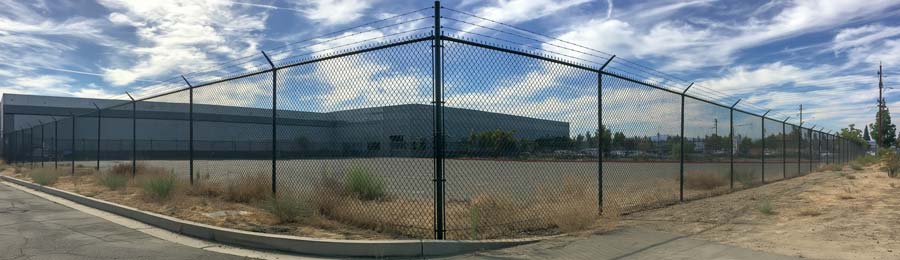
The first is the business property manager or facilities director responsible for a commercial or industrial property along Plano’s business corridors. These buyers are sourcing perimeter security fencing for data centers, office parks, warehouse facilities, and light industrial properties along the US-75 Telecom Corridor and the SH-121 and George Bush Turnpike business park zones. Their specification requirements are driven by security standards, not aesthetics. Their timeline is driven by construction schedules or security audits, not storm season. And their decision process involves multiple stakeholders and sometimes a formal bid process.
The second is the HOA property manager or board member responsible for maintaining common area fencing in one of Plano’s many deed-restricted communities. These buyers are sourcing pool enclosure fencing that meets Texas pool barrier code, ornamental iron for amenity center perimeters and entrance monuments, and utility area screening for mechanical equipment and dumpster enclosures. Their budget is an HOA maintenance line item. Their compliance requirement is a combination of city code and the community’s own architectural standards. And their decision process is faster than a corporate facilities project but more constrained by HOA approval requirements than a simple residential job.
We work with both. The specifications, the permitting process, and the project logistics differ between the two — which is why the commercial estimate conversation starts with understanding which category the project falls into before a material or specification is discussed.
Commercial Specifications vs. Residential
Commercial chain link fabric is 9-gauge wire — heavier than the 11-gauge standard for residential applications — with larger diameter line posts at 2-3/8 inches and heavier terminal posts at corners and gate openings. These specifications are not arbitrary: they reflect the cycle count, the impact resistance, and the long-term tension retention required for a fence that is working harder than a residential backyard enclosure. For ornamental iron at commercial frontages and HOA amenity centers, panel weight and post embedment depth increase proportionally with fence height. We specify commercial-grade materials on every commercial project — residential-grade material installed at commercial scale fails ahead of schedule and costs more to correct than it saved at the point of installation.
Perimeter Security Along Plano's Business Corridors
HOA Common Area Fencing, Access Control, and Commercial Project Logistics in Plano
HOA Common Area Fencing: Pool Enclosures, Amenity Centers, and Entrance Monuments
Plano’s HOA communities generate consistent commercial fencing demand across three application categories. Pool enclosure fencing must meet Texas pool barrier code requirements — a minimum 48-inch barrier height, self-closing and self-latching gates, and mesh or panel spacing that prevents a four-inch sphere from passing through. These are the same requirements that apply to residential pool fencing, enforced at a shared amenity scale where the HOA board carries the compliance responsibility rather than an individual homeowner.
Amenity center perimeter fencing — around clubhouses, fitness facilities, and recreational areas — is typically ornamental iron or aluminum specified to match the community’s entrance aesthetic. Entrance monument fencing and decorative perimeter fencing at community entry points is almost always ornamental iron, sized and finished to the HOA’s architectural standards. Ornamental iron fence installation covers material specifications and finish options for iron fencing applicable to both residential and HOA common area installations.
Utility area screening — dumpster enclosures, mechanical equipment screening, and utility access point fencing — is typically wood or chain link depending on the HOA’s standards and the visibility of the installation from common areas or streets.
Access Control and Gate Systems for Plano Business Properties
Commercial properties along Plano’s business corridors increasingly integrate access control into their perimeter fence systems — vehicle loop detectors, keypad and card reader entry systems, intercom and camera integration at gate openings, and in some cases license plate recognition systems at primary entry points. The gate system and the access control specification need to be designed together, not sequenced — a gate opening sized and framed for a manual gate cannot always accommodate the operator and access control hardware required for a fully integrated system without modification.
We design commercial gate and access control configurations as a single scope rather than as separate fence and technology projects. Automatic driveway gate installation covers operator and access control options at the residential and light commercial scale. For larger commercial installations requiring integrated access control systems, we assess the full scope during the commercial estimate and specify accordingly.
Installation on Active Commercial Sites
Commercial fence installation on occupied properties — businesses that remain operational during the project, HOA communities where residents are present, and construction sites with phased access requirements — requires coordination that residential work does not. We plan commercial installations to minimize disruption to daily operations, maintain security continuity during the installation period where perimeter integrity is a requirement, and sequence work to avoid conflicts with other trades on active construction sites. Project timelines and site access requirements are documented in writing before installation begins.
Commercial Permits and Project Coordination in Plano
Commercial fence installations in Plano require a building permit, and the permitting process for commercial projects involves additional documentation compared to residential work. Plans may require a site survey and in some cases engineering documentation for taller or more complex installations. HOA common area projects may require both a city permit and an HOA architectural approval before work can begin. We handle permit applications as part of every commercial project and coordinate with the City of Plano’s building department on documentation requirements before the project is scheduled.
Common Questions About Commercial Fencing in Plano
Do you install fencing for HOA communities in Plano?
Yes — HOA common area fencing is one of the most consistent commercial project categories in Plano’s market. We handle pool enclosure fencing to Texas pool barrier code, ornamental iron and aluminum for amenity center perimeters and entrance monuments, utility area screening, and replacement of aging common area fencing across Plano’s HOA communities. HOA projects require coordination with the community’s architectural review process in addition to city permitting, and we manage both as part of the project scope. Estimates for HOA common area projects are provided to the HOA board or property manager and are formatted for inclusion in the board’s vendor review process.
What chain link specifications are standard for commercial perimeter fencing in Plano?
Commercial chain link perimeter fencing in Plano’s business corridor applications typically uses 9-gauge wire fabric — heavier than the 11-gauge standard for residential work — with 2-3/8 inch diameter line posts and 2-7/8 inch terminal posts at corners and gate openings. Fabric height for commercial security perimeters commonly runs six to eight feet. Barbed wire outriggers are available for high-security applications where permitted by Plano’s zoning code for the specific property location. Vinyl-coated chain link in black or dark green is used for commercial applications where appearance is a secondary requirement alongside security function — common at HOA utility areas and secondary perimeter applications where the fence is visible from the street.
Does Plano require a permit for commercial fence installation?
Yes. All commercial fence installations in Plano require a building permit, and the commercial permitting process involves more documentation than a residential fence permit. Larger or more complex installations may require a site survey and engineering documentation in addition to a site plan. HOA common area projects require both a city permit and HOA architectural approval before installation can begin. We handle all permit applications as part of every commercial project and coordinate with the City of Plano’s building department on documentation requirements. Commercial permit processing timelines vary by project complexity — we advise on realistic permitting timelines during the estimate so the installation schedule can be planned accurately.
Can you install fencing on a commercial property while the business remains open?
Yes. We plan commercial installations around active business operations, maintaining site security and access continuity throughout the project. For perimeter fence installations where continuous security is required, we sequence the work so that no section of the perimeter is open simultaneously — completed sections are secured before the next section is started. For properties with specific access requirements — delivery schedules, customer traffic patterns, or construction sequencing with other trades — we document the access plan in writing before installation begins and coordinate with the property manager or facilities director throughout the project.
What ornamental iron specifications are typical for HOA entrance and amenity center fencing in Plano?
HOA entrance monument and amenity center fencing in Plano’s communities typically uses ornamental steel or aluminum panels in three to five foot heights for decorative boundary applications, and four to six foot heights for amenity center perimeter enclosures. Flat top and spear top panel profiles are the most common in Plano’s established communities. Powder-coat finish in black or dark bronze is standard — most Plano HOA architectural standards specify one or the other to maintain visual consistency across community entry points. For pool enclosure applications, panel spacing must satisfy Texas pool barrier code requirements regardless of the ornamental profile selected. We review HOA architectural standards and code requirements before specifying any material or profile for common area installations.
How much does commercial fencing cost in Plano?
Commercial chain link perimeter fencing in Plano typically runs $20 to $35 per linear foot installed for standard six to eight foot height in 9-gauge specification. Ornamental iron and aluminum for HOA amenity centers and entrance applications runs $30 to $55 per linear foot depending on panel height, profile complexity, and post embedment requirements. Pool enclosure fencing — chain link or ornamental to Texas code specification — is priced by the linear footage of the enclosure with compliant gate hardware included. Commercial gate systems with access control integration are scoped and priced separately based on the gate configuration and access control specification. Every commercial estimate is free, starts with a site assessment, and produces a written specification and cost breakdown before any material is ordered or work is scheduled.