
Fence Questions Answered for Plano and North Dallas Homeowners
Common questions about fence installation, repair, materials, permits, storm damage, HOA requirements, and specialty services across Plano and the surrounding North Dallas communities. Full answers below, organized by topic. For questions specific to a particular service, each service page includes its own detailed FAQ section.
Getting Started With a Fence Project in Plano

Do I need a permit to install or replace a fence in Plano, Texas?
Yes. The City of Plano requires a building permit for most new fence installations and full fence replacements. Standard residential privacy fences are limited to six feet in rear yards and four feet in front yards in most zoning districts. The permit application typically requires a site plan showing the fence location relative to property lines and structures. Repair work — replacing individual boards, resetting posts, rehanging gates — generally does not require a permit. If your Plano HOA has requirements beyond the city code, both sets of requirements apply and we review both during the estimate.
Does my HOA need to approve my fence before I can get a permit?
In most of Plano’s deed-restricted communities, yes — HOA architectural approval and city permitting are separate processes that both need to be completed before installation begins. The HOA approval typically comes first: you submit a design proposal to the architectural review committee covering material, height, style, and in some cases stain color, and the committee approves or requests modifications. The city permit application follows. We prepare the HOA submission documentation and handle the permit application as part of every project — both processes are reviewed during the estimate so you know what to expect before any work is scheduled.
How long does fence installation typically take in Plano?
A standard residential fence replacement in Plano — a full rear yard line, typically 100 to 200 linear feet — runs one to two days from post-setting to final board attachment. Post removal from prior installations adds time, particularly for posts set in concrete in Plano’s clay soil. Posts must cure in concrete before boards are attached, which means a post-setting day followed by a board-attachment day is standard for most full replacements. Shorter repair jobs and partial replacements are often completed in a single day. Every estimate includes a realistic timeline based on the specific scope before any work is scheduled.
Can I get a fence estimate without being home?
Yes, for most projects. If the fence line is accessible — the gate is unlocked or the fence perimeter can be measured from the exterior — we can complete a measurement and produce an estimate without requiring you to be on-site. For projects that involve HOA review, permit applications, or repair assessment where post condition needs to be evaluated from inside the yard, an on-site visit with access is necessary. We confirm access requirements when the estimate appointment is scheduled so there are no wasted trips.
Materials for North Texas and Plano's HOA Communities

Is cedar or pine better for a fence in Plano and North Texas?
Cedar is the better choice for Plano’s climate and soil conditions. Western Red Cedar contains natural oils that provide resistance to moisture and insects without relying entirely on chemical treatment. It moves less aggressively with North Texas temperature and humidity swings than treated pine, holds stain better, and reaches a longer service life under the same conditions. The practical consideration in Plano is that most HOA covenants specify cedar as the required or preferred material for rear yard fencing — which means for most Plano homeowners in deed-restricted communities, the material question is already answered before the estimate conversation begins.
Will my Plano HOA approve vinyl fencing?
It depends on your specific covenant. Plano’s older established neighborhoods were typically written with cedar as the specified rear yard fencing material, and some explicitly exclude vinyl. Newer HOA communities along Plano’s northern tollway corridors are more likely to include vinyl on the approved materials list. Some covenants that allow vinyl also specify color — white or tan in most cases — and may require the fence profile to match neighboring properties. We pull and review HOA documentation before every estimate and will tell you clearly whether vinyl is an option for your property before any material discussion proceeds. For more detail on vinyl performance in Plano’s climate, the vinyl fence installation page covers UV inhibitor specifications and the cedar vs. vinyl cost comparison over a 20-year horizon.
My fence came pre-stained from the installer. Does it still need to be re-stained?
Yes. Pre-stained cedar arrives with a factory-applied stain that provides a head start on UV and moisture protection, but it does not eliminate the need for re-staining as the wood cures and the fence ages. Under North Texas conditions, a pre-stained cedar fence typically needs re-staining within three to five years of installation. The re-staining process requires a condition assessment first — if the factory stain has worn unevenly or begun to peel on south and west-facing sections, prep work is needed before new stain is applied. The fence staining and sealing page covers the full re-staining process, timing, and what to expect when a pre-stained fence comes due for its first professional re-staining.
What is the difference between wrought iron and aluminum ornamental fencing?
True wrought iron is rarely used in modern fence manufacturing. What the industry and most Plano HOA documents call wrought iron fencing is fabricated from mild or tubular steel with a galvanized layer and powder-coat finish. Aluminum is a separate material — lighter than steel, rust-proof without any coating, and increasingly specified by name in Plano’s newer HOA covenants. The visual result of ornamental steel and aluminum is nearly identical. The differences that matter are rust resistance over time, HOA specification compliance, and cost — aluminum typically runs higher per linear foot than powder-coated steel. If your covenant names the material, the fence needs to match it. We review covenant language before specifying either material on any Plano project.
Repair, Replacement, and Plano's Aging Fence Stock
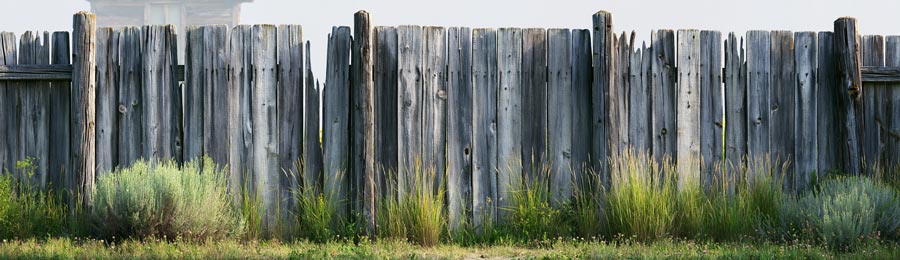
Is it worth repairing a fence or should I replace it in Plano?
The answer depends on post condition, not board condition. A fence with posts that are plumb, firm at the ground line, and not rotted at the base is almost always worth repairing at the board and rail level. A fence with posts that have heaved out of plumb, failed at the soil line, or rotted through is a replacement candidate regardless of how the boards look above ground. In Plano’s established neighborhoods, where most original fences are 25 to 35 years old, the post condition assessment is the critical first step on every repair call — because Plano’s clay soil has been working on those posts through hundreds of wet-dry cycles. The fence repair page covers the full assessment process and the repair versus replacement decision framework in detail.
Who is responsible for fence repair between neighbors in Texas?
Texas law does not require neighbors to share fence repair costs unless there is a written cost-sharing agreement between the property owners or an HOA rule that creates that obligation. In Plano’s deed-restricted communities, some HOA covenants address shared fence maintenance responsibility — check your covenant first. Without a written agreement or HOA rule, fence repair responsibility falls to whoever owns the fence, which is typically determined by which side of the property line the fence is on and which direction the posts face. We can provide a written estimate that documents the damage and the repair cost — useful for a cost-sharing conversation with a neighbor regardless of what the law requires.
What is the 7-year fence law in Texas?
There is no single Texas statute commonly called the 7-year fence law as it applies to most residential fence situations. The question likely refers to adverse possession provisions in Texas property law, which have specific conditions and timelines that vary by situation. For most Plano homeowners, HOA rules — not state fence law — govern fence maintenance requirements and property line fence disputes. If a property line fence dispute involves adverse possession questions or boundary disputes, a real estate attorney is the correct resource. We can provide written documentation of fence condition and damage scope for any dispute that benefits from that record.
How often should a wood fence be stained in Plano, Texas?
Every three to five years is the standard re-staining interval for cedar privacy fences in Plano’s climate. The practical test is the water bead test: pour a small amount of water on the fence surface. If it beads and runs off, the existing stain is still providing protection. If it absorbs immediately, the stain has worn through and the wood is exposed. In Plano’s UV environment, south and west-facing fence sections — which take the most direct sun exposure — typically wear faster than north and east-facing sections and may need attention on the shorter end of that interval. Fences that have never been stained or that went multiple cycles without treatment will need prep work before the stain can be applied effectively.
Storm Damage and Insurance in North Texas
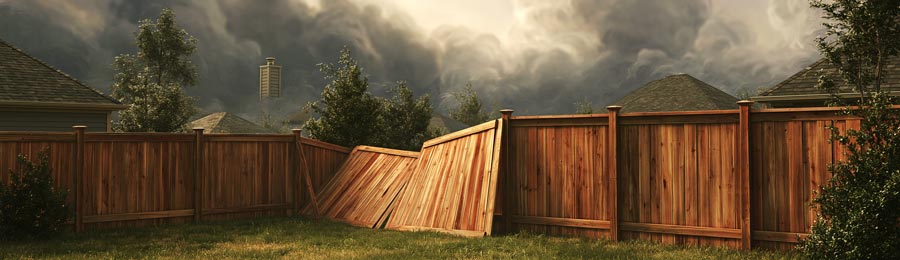
Does homeowner's insurance cover storm damage to a fence in Plano?
Most standard Texas homeowners insurance policies cover sudden fence damage from wind, hail, and fallen trees — subject to your deductible and the policy’s coverage structure. The key variable is whether your policy provides actual cash value or replacement cost value coverage for other structures, which is the category fences typically fall under. Actual cash value policies deduct depreciation from the payout — on a 30-year-old cedar fence in Plano, that depreciation can be substantial. Replacement cost value policies pay for a comparable new installation without deducting for age. Checking which coverage structure your policy provides before a storm event is worthwhile — the difference in a major fence claim can be several thousand dollars.
What should I do immediately after a storm damages my fence in Plano?
Photograph the damage before anything else — before debris is moved, before temporary repairs are made, before a tarp is placed over damaged sections. The photographs taken in the immediate post-storm condition are the foundation of the insurance claim. Once you have documented the damage thoroughly, contact your insurance company to report the claim, then call for a professional damage assessment. Do not authorize permanent repair or replacement work before the insurance adjuster has reviewed the damage. Temporary stabilization of unsafe fence sections is appropriate; permanent work should wait for the claim process to advance. In Plano’s HOA communities, notify the HOA of the damage simultaneously — violation notices for storm-damaged fences arrive faster than most homeowners expect.
How do I document storm damage to my fence for an insurance claim?
The documentation package that supports a storm damage fence claim typically includes photographs of the damage in its immediate post-storm condition, a written damage assessment identifying which sections and posts are damaged and the extent of the damage, a written replacement or repair estimate with material specifications, and in some cases a statement confirming that the damage is consistent with the storm event rather than pre-existing deterioration. We provide all of these as part of the storm damage assessment process. Scheduling the assessment promptly — before temporary repairs are made — protects the documentation integrity of the claim. The storm damage fence replacement page covers the full insurance documentation process and the ACV versus RCV coverage distinction in detail.
Can I upgrade my fence material when replacing a storm-damaged fence?
Yes. The insurance claim covers the like-for-like replacement cost — what it costs to replace the damaged fence with a comparable new installation of the same material and specification. If you want to upgrade the material, add pre-stain treatment, or change the fence style, you pay the cost difference between the like-for-like replacement and the upgraded specification. Many Plano homeowners whose original fence was treated pine or an older specification use the storm replacement event to upgrade to Western Red Cedar. We provide estimates that separate the insurance-covered portion from any upgrade differential clearly, which makes the claim submission straightforward.
Gates, Commercial, and Specialty Services
Why do automatic gate operators fail during North Texas freezes?
Gate operator failures during freeze events follow a predictable pattern. Battery backups lose capacity in sustained cold and may not hold enough charge to cycle the gate when grid power is interrupted. Gear lubricants in budget operators thicken significantly below freezing, creating drag that overloads the motor and trips the thermal protection circuit. Control boards in entry-level operators are frequently not rated for the temperature extremes that Plano experiences in an active freeze season. In most cases the gate itself is undamaged — the failure is in the operator electronics or battery system. We assess the specific failure point and provide a written repair versus replacement recommendation before any work begins. The automatic driveway gates page covers operator selection criteria for North Texas conditions in detail.
Does my Plano HOA need to approve an automatic gate on my individual driveway?
In most of Plano’s deed-restricted communities, yes — individual driveway gate installations require HOA architectural review approval even in communities that already have a neighborhood-level gate system. The community entry gate and an individual homeowner’s driveway gate are governed by separate processes. The HOA architectural review typically covers gate material, height, setback from the street, and operator visibility. We prepare the standard documentation that Plano HOA architectural review committees require and advise on what the approval process looks like for your specific community before any installation is scheduled.
What type of fencing is most appropriate for commercial properties in Plano?
The best choice depends on the application. Chain link is the most cost-effective option for perimeter security and large-area industrial fencing — commercial applications use 9-gauge fabric and larger post sizing than residential work. Ornamental iron or aluminum is appropriate for business frontages, office park perimeters, and HOA common area applications where appearance is a requirement alongside security function. Plano’s Telecom Corridor and business park density along SH-121 and the George Bush Turnpike generate consistent demand for commercial-grade chain link and ornamental iron. The commercial fencing page covers HOA common area fencing, Telecom Corridor business property specifications, and commercial permitting in Plano in detail.
Can a custom gate be matched to my existing fence in Plano?
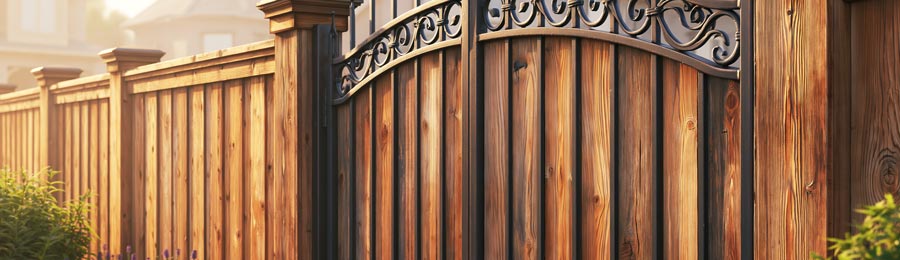
Yes — matching the existing fence material, height, and profile is the standard approach for custom gate fabrication in Plano’s HOA communities. Cedar gates are built with the same Western Red Cedar as the fence and can be pre-stained or stained on-site to match the existing fence color. Iron gates are powder-coated to match the existing fence finish. For properties with a two-material perimeter — ornamental iron in the front yard, cedar in the rear — combination frame gates are fabricated with a steel structural frame and cedar infill that satisfies the HOA’s front-yard iron specification while matching the cedar fence aesthetic from the backyard side. The custom gates page covers the full fabrication process, HOA design approval, and automation compatibility for custom gate projects in Plano.
Still have a question? We can answer it on-site.
Every fence estimate is free, includes a full look at the property, and gives you the information you need to make a decision — on repair, replacement, material, or any other fence question specific to your property in Plano or the surrounding North Dallas communities.