
Storm Damage Fence Replacement in Plano — Two Deadlines, One Decision
When a storm takes down a fence in Plano’s HOA communities, two clocks start at once: the insurance claim and the HOA compliance notice. We handle both sides of that timeline.
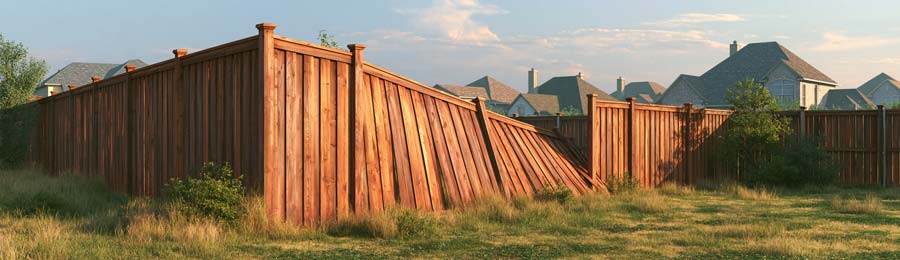
The Storm Replacement Decision Most Plano Homeowners Were Not Expecting to Make
A storm takes down a fence section — or the whole rear yard line — and the immediate instinct is to get it back up as fast as possible. That instinct is correct on the timeline. It is worth pausing on the decision about what goes back up.
Most of the cedar fences coming down in Plano’s established neighborhoods after major storm events are 25 to 35 years old. They were installed when the subdivision was new, they have been through hundreds of North Texas weather cycles, and the posts that came out of the ground during the storm were often already past their reliable service life before the storm hit. Replacing them in kind — same material, same specification — is one option. Using the replacement event to upgrade the material, add a pre-stain treatment, or reconsider the fence line configuration is another.
The insurance payment structure determines how much of that decision is funded by the claim. Understanding the difference between actual cash value and replacement cost value coverage — and knowing which one your policy provides — changes the financial picture for the upgrade conversation significantly.
The Two Deadlines Plano Homeowners Face After Storm Damage
The first deadline is the insurance claim. Most Texas homeowners insurance policies have a reporting window for storm damage claims, and the documentation that supports the claim needs to be assembled before temporary repairs are made or debris is removed. Photographing the damage in its immediate post-storm condition — before anything is moved, covered, or cleaned up — is the single most important step in the claim process and the one most homeowners skip in the rush to secure the property.
The second deadline, specific to Plano’s deed-restricted communities, is the HOA compliance clock. An open or visibly damaged fence line in an HOA community does not stay unnoticed. Violation notices for storm-damaged fences arrive faster than most homeowners expect, and they come with a compliance timeline that runs parallel to — not after — the insurance claim process. We provide written damage documentation for both the insurance adjuster and the HOA review process and can advise on how to communicate with the HOA during the claim period to manage the compliance timeline.
When Plano's Aging Cedar Posts Finally Come Down in a Storm
Insurance Coverage, Post Failure, and the Replacement Decision in Plano's Established Neighborhoods
Why Full Replacement Is More Common Than Repair After Plano Storm Events
The fence repair page covers the repair vs. replacement assessment in detail. The short version for storm damage situations in Plano’s established neighborhoods is this: when a major storm hits a cedar fence whose posts have been cycling through clay soil expansion and contraction for 30 years, the storm is frequently what breaks posts that were already structurally compromised. The visible damage — sections down, boards scattered — looks like a repair situation. The post condition at the soil line tells a different story. Posts that are soft, rotted, or that pulled out of the ground cleanly rather than snapping at or above the soil line have reached end of life. When that condition is present across multiple posts in a run, the economics and the structural case both favor full replacement over targeted repair.
We assess every post in the damaged run during the estimate, not just the sections that are visibly down. The assessment report covers which posts are sound, which have failed, and whether the damage scope crosses the threshold where replacement is the more cost-effective and structurally correct decision.
Understanding Your Insurance Coverage: ACV vs. RCV
Two insurance policy structures handle fence replacement claims differently, and knowing which one you have changes the financial picture for the replacement decision significantly.
Actual cash value policies pay the replacement cost of the fence minus depreciation. A 30-year-old cedar fence has been substantially depreciated — the actual cash value payout on that fence may be a fraction of what a new installation costs. Replacement cost value policies pay the cost of replacing the fence with a comparable new installation without deducting for depreciation. If you have RCV coverage, the insurance pays for a new fence of equivalent specification. If you have ACV coverage, you are funding the depreciation gap out of pocket.
The upgrade decision — choosing cedar over treated pine, adding pre-stain treatment, or stepping up to a board-on-board style from a side-by-side — is funded by the homeowner regardless of policy type. The insurance pays the like-for-like portion; any upgrade above that specification is the homeowner’s cost. We provide estimates that separate the like-for-like replacement cost from any upgrade differential so the insurance claim and the upgrade decision are clearly separated in the documentation.
What the Insurance Adjuster Needs
The documentation package that supports a storm damage fence claim typically includes photographs of the damage before any repairs or debris removal, a written damage assessment identifying which fence sections and posts are damaged and the extent of the damage, a written replacement estimate with material specifications, and in some cases a statement confirming that the damage is consistent with the storm event rather than pre-existing deterioration. We provide all of these as part of the storm damage assessment process. Scheduling the estimate promptly — before temporary repairs are made — protects the documentation integrity of the claim.
Post-Storm Scheduling in Plano
Plano’s spring storm season generates concentrated demand for fence replacement that fills scheduling queues faster than any other time of year. Homeowners who contact us within 48 hours of a major storm event get into the scheduling queue before it fills. We are transparent about current lead times during the assessment call and prioritize situations where an HOA compliance deadline is part of the picture. Temporary fencing — stake and mesh barrier — is available for properties that need a secure boundary while permanent replacement is being scheduled.
Common Questions About Storm Damage Fence Replacement in Plano
What should I do immediately after a storm damages my fence?
Photograph the damage before anything else — before debris is moved, before temporary repairs are made, before a tarp is placed over damaged sections. The photographs taken in the immediate post-storm condition are the foundation of the insurance claim documentation. Once you have documented the damage thoroughly, contact your insurance company to report the claim and then call for a professional assessment. Do not authorize permanent repair or replacement work before the adjuster has reviewed the damage — most policies require adjuster review before repair work proceeds. Temporary stabilization of unsafe fence sections is appropriate; permanent repair work should wait for the claim process to advance.
Will my homeowners insurance cover storm fence replacement in Plano?
Most standard Texas homeowners insurance policies cover sudden fence damage from wind, hail, and fallen trees — subject to your deductible and the policy’s coverage structure. The key variables are whether your policy provides actual cash value or replacement cost value coverage, and whether the cause of damage is a covered peril under your policy. Gradual deterioration and pre-existing damage are excluded. In Plano, where many fences are 25 to 35 years old, the depreciation factor under an ACV policy can significantly reduce the payout. We provide written damage assessments and replacement estimates formatted for insurance adjuster review and can clarify what documentation your adjuster will need before the claim is processed.
What is the difference between actual cash value and replacement cost value for a fence claim?
Actual cash value coverage pays the replacement cost of the fence minus depreciation. For a 30-year-old cedar fence in Plano, the depreciated value may be substantially less than the cost of a new installation — which means the ACV payout covers only a portion of the replacement cost and the homeowner funds the remainder. Replacement cost value coverage pays for a comparable new installation without deducting for depreciation. If your policy includes RCV coverage for other structures — which is the category fences typically fall under — the insurance pays for a new fence of equivalent specification regardless of how old the damaged fence was. Checking your policy’s other structures coverage and whether it is ACV or RCV before a storm event is worthwhile — the difference in a major fence claim can be several thousand dollars.
My HOA sent a notice about my storm-damaged fence. What do I do?
Contact us for a damage assessment as soon as possible. HOA compliance notices for storm-damaged fences in Plano’s deed-restricted communities typically come with a repair or replacement deadline, and that deadline runs parallel to the insurance claim process rather than after it. We provide written damage documentation that you can submit to the HOA to demonstrate that the damage is being actively addressed and that professional assessment and replacement are in process. Most Plano HOA architectural review committees will work with homeowners who can show documented progress on a storm damage claim — the key is communicating proactively rather than waiting for the replacement to be complete before contacting the HOA.
Can I upgrade my fence material when replacing a storm-damaged fence?
Yes. The insurance claim covers the like-for-like replacement cost — what it costs to replace the damaged fence with a comparable new installation of the same material and specification. If you want to upgrade the material, add pre-stain treatment, change the fence style, or step up to a heavier post specification, you pay the cost difference between the like-for-like replacement and the upgraded specification. We provide estimates that separate the insurance-covered portion from the upgrade differential clearly, which makes the claim submission straightforward and gives you a clear picture of the out-of-pocket cost for any upgrades you want to add. Many Plano homeowners whose original fence was treated pine or an older specification use the storm replacement event to upgrade to Western Red Cedar — the insurance covers the pine replacement value and the homeowner funds the cedar differential.
How long does storm fence replacement take in Plano?
Assessment and estimate are typically completed within 24 to 48 hours of contact for storm damage situations. Material lead times for standard cedar and iron fence materials are generally two to five business days. Installation for a standard residential rear yard fence replacement runs one to two days once materials are on-site. The full timeline from first contact to completed installation typically runs one to two weeks under normal conditions. After major storm events that affect a large number of properties across Plano simultaneously, scheduling lead times extend — homeowners who contact us within 48 hours of a storm event get into the queue before it fills. We provide realistic timeline estimates during the assessment call and update on any scheduling changes as they develop.
Do I need a permit to replace a storm-damaged fence in Plano?
Yes. The City of Plano requires a building permit for fence replacement, including replacement of storm-damaged fences. The permit requirement applies to full fence replacement — repair work that does not alter the fence line or replace the majority of the fence structure typically does not require a permit. For storm damage situations where the HOA has issued a compliance notice, we handle the permit application as part of the replacement process and factor permit timing into the overall project schedule. Permit processing for standard residential fence replacement in Plano typically runs two to five business days.